
Slots, Poker, and the Real Math Behind iGaming Success
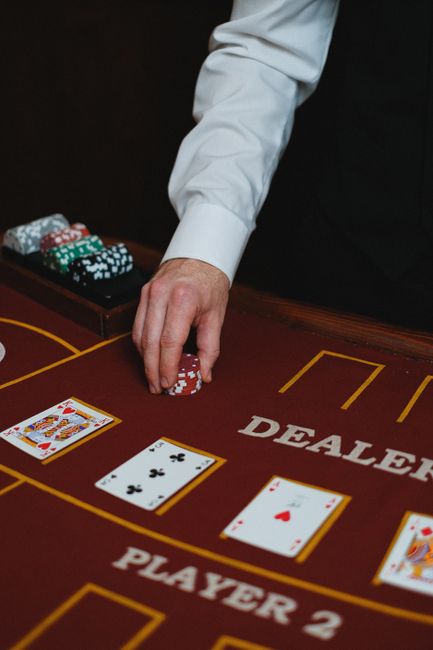
Most people walk into a casino or open a betting app thinking the house edge is a vague, mystical force. It isn't. It's arithmetic, and once you understand the numbers, the entire iGaming landscape changes. You stop chasing ghosts and start making decisions based on probability, variance, and expected value. This article isn't about guaranteed wins—those don't exist—but it's about understanding the machinery well enough to play smarter, whether you're spinning slots, grinding poker tables, or placing sports bets.
The House Edge Explained Without the Jargon
Every game in a casino or on a betting site has a built-in mathematical advantage for the operator. That's how they stay in business. The size of that advantage varies wildly, and choosing where to spend your money is the single most underrated skill in iGaming.
Consider roulette. European roulette has a single zero, giving the house a 2.7% edge. American roulette adds a double zero, bumping that edge to 5.26%. Same game, nearly double the disadvantage—purely because of one extra pocket. On a $100 bet repeated over time, that difference is enormous.
Now look at blackjack played with basic strategy: the house edge can drop to roughly 0.5%. That's ten times better than American roulette. Slots, meanwhile, typically carry edges between 2% and 10% depending on the machine and jurisdiction, though many online slots sit closer to 3-5% with high RTP (return to player) percentages around 96%.
- Blackjack (basic strategy): ~0.5% house edge
- Baccarat (banker bet): ~1.06%
- European roulette: ~2.7%
- Slots (online, high RTP): ~3-4%
- American roulette: ~5.26%
- Keno: often 25-35%
The takeaway isn't that you should only play blackjack. It's that if you're going to spend three hours gambling, knowing which games bleed you slower matters more than any "system" sold online. For a closer look, HELLO88 has helpful details.
Slots: Volatility Is the Real Story
RTP gets all the attention, but volatility is what actually determines your experience. Two slots can both have a 96% RTP and feel completely different. A low-volatility slot pays small amounts frequently—think $0.20 wins every few spins. A high-volatility slot might eat 200 spins before hitting a 500x multiplier.
Neither is "better." It depends on your bankroll and patience. If you're playing with $50 and want a session that lasts, low volatility keeps you in the game. If you're chasing a big score and accept that you'll likely bust, high volatility gives you that shot.
Here's something most players miss: bonus features and free spins aren't random add-ons. They're mathematically baked into the RTP. A slot with a huge jackpot mechanic usually has lower base-game payouts to compensate. The money always balances out across millions of spins. Some of the clearest guidance on this comes from HELLO 88.
Practical slot tips that actually hold up
- Check the RTP before you play—many regulators require it to be published, and anything below 94% is stingy.
- Match volatility to your bankroll, not your mood.
- Set a loss limit before your first spin and treat it as final.
- Ignore "hot" and "cold" machine myths—each spin is independent on a certified RNG.
Poker: The Only Game Where You Play the Players
Poker is fundamentally different from slots and roulette because you're not playing against the house—you're playing against other people, and the house just takes a rake. That means a skilled player can actually have a positive expected value over time. It's the one major casino game where long-term profit is mathematically possible for a disciplined minority.
But skill doesn't guarantee short-term success. Variance in poker is brutal. A winning player can lose for weeks. The key concepts that separate profitable players from recreational ones:
- Position: Acting last gives you information. It's worth more than most beginners realize.
- Pot odds: If you're drawing to a flush and the pot offers 4-to-1 while your odds of hitting are 4.2-to-1, the call is roughly break-even before implied odds.
- Bankroll management: Serious cash-game players keep 20-40 buy-ins for their stake. Tournament players need 50-100 buy-ins because of higher variance.
- Game selection: Beating a soft table at lower stakes is more profitable than grinding a tough table at higher stakes.
Online poker adds another layer: tracking software, HUDs in some rooms, and faster hand rates. You'll see more hands in an hour online than in a full day live, which amplifies both your edge and your variance.
Sports Betting and the Vig
Sports betting has exploded, but a lot of new bettors don't understand the vig—the commission built into the odds. When you see odds of -110 on both sides of a spread, you need to win 52.4% of your bets just to break even, not 50%. That 2.4% gap is the sportsbook's edge, and it's relentless.
To beat it long-term, you need either genuine predictive skill, sharp line shopping across multiple books, or promotional value. Line shopping alone—simply taking the best available price on every bet—can improve your returns by 1-3% over time, which sounds small until you realize that's the difference between winning and losing.
Live betting and parlay cards are where the house edge quietly climbs. Parlays multiply odds but also multiply the vig, and casual bettors love them for exactly that reason. If you must parlay, do it sparingly and understand you're paying a premium for the thrill.
Bankroll, Discipline, and the Psychology Trap
Every mathematical edge in the world collapses if you don't manage your money and your emotions. Casinos and betting apps are engineered to keep you playing—free spins, cashback offers, VIP tiers, and near-miss animations are all designed around behavioral psychology.
Set concrete rules before you play:
- Decide your total session bankroll and never reload mid-session.
- Choose a time limit alongside a loss limit.
- Never chase losses—the math doesn't know you're "due."
- Track results honestly, even the ugly sessions.
- Walk away after a big win. That win only counts if you keep it.
Chasing losses is the fastest way to turn a controlled entertainment budget into a problem. The games are designed to be fun, and the house edge ensures they're profitable for operators over millions of hands. Your job is to stretch your entertainment dollar as far as possible and enjoy the ride.
Final Thoughts
iGaming rewards players who treat it like a hobby with real math attached, not a lottery ticket. Understand the house edge, choose games and stakes that fit your bankroll, respect variance, and manage your psychology as carefully as your money. Whether you're spinning a high-volatility slot, three-betting on the button in a poker tournament, or shopping for the best line on a Sunday football game, the same principle applies: the smarter your decisions, the longer and more enjoyable your sessions will be. The house always has its edge—but you control how much of it you hand over.


Learn gentle questions and storage ideas to reduce sentimental clutter while keeping the stories and pieces that matter most.
Build a realistic schedule that covers kitchens, bathrooms, floors, and dusting, so your home stays consistently fresh without marathon sessions.
Use a simple two-cloth method, the right diluted solution, and a squeegee technique for clearer glass in every room.
Mix white vinegar, bicarbonate of soda, and lemon to tackle common messes with fewer harsh chemicals and less plastic waste.